INGREDIENTS
Food dyes and other fear factors:
the erosion of public trust and how to rebuild it

Jessica Steier, DrPH
Founder and Chief Executive Officer, Unbiased Science, Amherst, Massachusetts, United States

About the Author
Jessica Steier
Jessica Steier, DrPH, PMP, founder and CEO of Unbiased Science, is an accomplished public health expert specializing in science communication. She has dedicated her working life to rigorous scientific inquiry and bettering the health and welfare of communities. A powerful voice on evidence-based food claims, Jess writes prolifically at https://theunbiasedscipod.substack.com

KEYWORDS
Food industry
Food dyes
Organic food
Pesticides
Fluoride
Agriculture
Abstract
From the latest obsessions of health “influencers”, to political intervention around what to safely feed children, digital channels are awash with suspect advice on what we eat. This includes guidance on food dyes, and safety concerns linked to heavy metals and pesticides in food and water. Anxiety is now so high that consumers are avoiding fresh salad, vegetables, and fruit, risking greater public health issues. This article considers the role the agro-food industry should play in countering mis- and dis-information.
From the latest diet fads and supplements pushed by self-proclaimed health “influencers”, to a wave of new political intervention and associated controversy around what to safely feed children, digital channels are currently awash with suspect advice on what to consume and what to avoid.
All of this “noise” is creating unwarranted anxiety, especially in those already highly conscious about what they put into their bodies. From breakfast cereals to seed oils to bagged, pre-washed salad, many consumers are thinking twice about every food choice they make now.
The impact of dogmatic claims and misleading advice can be particularly pronounced for those struggling with the rising cost of living: “organic” produce commonly carries a 20-40% premium over non-organic equivalents, for instance.
Are the headline culprits really the enemy?
Sudden shifts in food trends and food safety focus can cost producers dearly in manufacturing, supply chain and labeling adjustments. But a broader problem for the food industry is that it is becoming harder for consumers to differentiate what is real (scientifically robust in its evidential support), and what is safe to ignore.
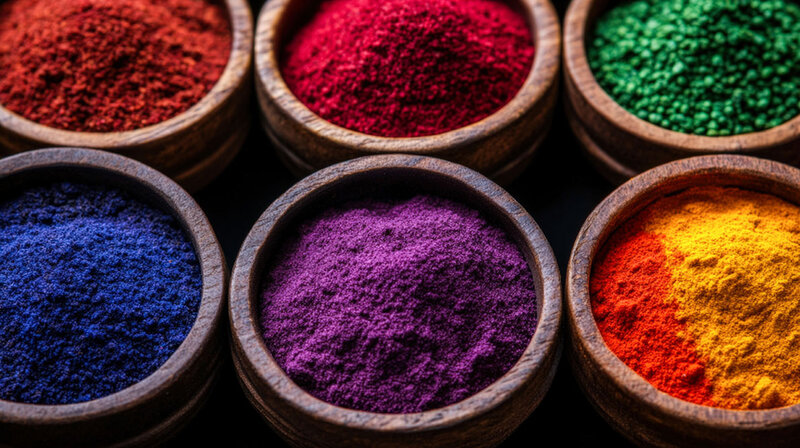
Among the latest concerns being linked to public health are food dyes/colors, with suggested links to cancer, ADHD in kids, and other negative outcomes. In the US, the Make America Healthy Again (MAHA) movement, led by Robert F. Kennedy Jr, has called for eight artificial food dyes to be eliminated from US food supply by the end of 2026 (1). This is despite a lack of data on evidence of risk to human health (often the foods in question have more worrying concentrations of sugar or sodium), and without considering the trade-offs and costs that will come with switching to natural colorings (2).
Other topical concerns surround the presence of heavy metals and pesticides in food and water (3), even though the presence of a substance doesn't automatically equate to harm. In a 2024 survey by the International Food Information Council (IFIC), nearly 60% of Americans who expressed concern about pesticide use expressed a belief that affected foods are bad for their health, with 36% claiming that pesticides used today are “more toxic than they have ever been” (4).
Such beliefs are leading to low levels of vegetable and fruit consumption in the US, a trend that risks negatively affecting public health to a more significant degree. There are other big-picture concerns too, including the very real challenge of sustainable food supply as populations grow and the planet warms. Without modern pesticides, there would be 78% fruit losses, 54% vegetable losses, and 32% cereal losses, according to the US National Centre for Biotechnology Information (5).
Global confusion
Illogical or inconsistent food safety advice is not just an American phenomenon. In Europe, despite decades of its safe use, the food additive monosodium glutamate (MSG), used as a flavor enhancer, continues to face unwarranted fear across multiple countries - enduring "Chinese Restaurant Syndrome" associations triggered by a single, non-peer-reviewed letter to a medical journal in 1968 (6).
Cultural factors also play a part in attitudes to food safety and consumers’ acceptance of new thinking. While Japanese consumers accept raw egg to be safe (subject to proper food safety systems), other countries remain unshakeable in their fear of consuming uncooked eggs while periodically reviving the debate about how eggs should be stored (7).
In the UK, there is still strong public resistance to genetically-modified crops, in spite of scientific consensus on safety and the finding that GM crop agriculture adoption has reduced pesticide use - by 748.6 million kg (−7.2%) of active ingredient between 1996 and 2020 (8). And in several countries, debates continue about the relative risks of adding fluoride to water, despite clear dental health benefits (9).
The fallout of proliferating food fear is tangible, and worrying. The impact to consumers includes increased food anxiety and decision fatigue; "chemophobia" (an irrational fear of chemicals/additives); “analysis paralysis” in grocery shopping; as well as economic stress (the feeling of pressure to buy premium alternatives).
For the agriculture and food industry, anticipating and combating the latest subjects of mis- and dis-information has become imperative. But how?
What is driving the rise in food safety misinformation?
First, it is useful to break down the problem and establish what is behind the current surge in food health mis- and dis-information. A few factors stand out.
One is the preoccupation with “natural”; the assumption that the less something has been “tampered with” or processed, the healthier it will be. Highlighting consumers’ confusion over “organic” produce, in the IFIC survey almost half of Americans expressed the (mistaken) belief that “organic agriculture does not use pesticides to grow food.”
Consumers also have difficulty differentiating between the presence of something and the chance of it presenting actual harm to health. The biggest amplifier of uncertainty and fear, however, is the pervasiveness of ill-informed opinion across the internet and social media. And because bad news sells (attracts more clicks), misinformation travels a lot faster and farther than credible information (10).
The irony is that many of the technologies under attack actually improve health outcomes – e.g. pesticides that prevent crop losses; processing that enables fortification; preservation that reduces foodborne illness.
Where policies and standards are driven by emotional arguments rather than evidence - where there is no balanced understanding of the benefits and trade-offs – food producers are forced to create solutions to problems that don't exist, while ignoring the real challenges of food security and accessibility. And who is hurt in the process? The very populations these policies are designed to protect.
Facing down fears with good information
While ignoring government mandates is not an option, pushing back hard against online misinformation is and this is where the agriculture and food industry needs to be strategic, beginning with an effective communications plan.
This means moving away from defensive messaging (e.g. "our ingredients are safe") in favor of proactive education about their specific benefits. Bringing to life any trade-offs visually is another powerful approach. This is about showing consumers what the food system looks like without modern technologies, for instance – because people typically need concrete visual cues to understand abstract risks.
Tackling the grey areas head on with education can be especially impactful, especially to bring perspective around “hazard vs. risk” perception. One way to do this is by developing a standardized framework – e.g. to clearly distinguish between a substance's ability to cause harm vs the actual likelihood of harm with typical exposure.
More broadly, there needs to be a drive toward greater transparency - without fearmongering. For instance, via context-rich labeling that explains ingredient functions and safety testing, and side-by-side comparisons (e.g. showing food availability/affordability with and without modern practices). Supplementing this with clear communication about why certain technologies exist (e.g. their bearing on food safety, nutrition, accessibility) will further help to drive the right messages home.
Reference to robust independent sources can be powerful, so consider building coalitions with credible health organizations; supporting independent science communication (rather than industry-funded messaging); and engaging with food security advocates to highlight accessibility issues.
For the mid to longer term, educational partnerships – e.g. working with schools and healthcare providers on nutrition science - can present opportunities to engage with younger generations.
Regulatory engagement can be valuable, too, providing a chance to advocate for evidence-based policy timelines that allow proper supply chain adaptation. International collaborations may be important too, e.g. exchanging data on successful technology adoption across different regulatory environments.
Ultimately, this is about restoring perspective by replacing fear with evidence-based understanding -while protecting the food system innovations (modern agriculture) that make healthy, safe, affordable food possible for everyone.

References and notes
- HHS, FDA to Phase Out Petroleum-Based Synthetic Dyes in Nation’s Food Supply, FDA, April 22, 2025: https://www.fda.gov/news-events/press-announcements/hhs-fda-phase-out-petroleum-based-synthetic-dyes-nations-food-supply
- The Truth About Synthetic Food Dyes, blog by Jessica Knurick, PhD (Nutrition Science), RDN, April 28, 2025: https://drjessicaknurick.substack.com/p/the-truth-about-synthetic-food-dyes?utm_medium=web
- The MAHA Report, White House, May 2025 (section 2 covers chemicals in the environment): https://www.whitehouse.gov/wp-content/uploads/2025/05/MAHA-Report-The-White-House.pdf
- Latest Research Reveals What’s Really Keeping Consumers From Eating Fruits and Vegetables, April 2024: https://ific.org/media-information/press-releases/pesticide-perceptions/ (survey: 2024 IFIC Spotlight Survey: Public Perceptions Of Pesticides & Produce Consumption)
- Agriculture Development, Pesticide Application and Its Impact on the Environment, National Centre for Biotechnology Information, National Library of Medicine, 2021: https://pmc.ncbi.nlm.nih.gov/articles/PMC7908628/
- ‘That Won-Ton Soup Headache’: The Chinese Restaurant Syndrome, MSG and the Making of American Food, 1968–1980, Ian Mosby, Social History of Medicine, Volume 22, Issue 1, April 2009, Pages 133–151, https://doi.org/10.1093/shm/hkn098, Published: 02 February 2009: https://academic.oup.com/shm/article-abstract/22/1/133/1627040
- Back to the egg: a shining example of absurd EU regulation, Euractive.com, September 2020: https://www.euractiv.com/section/agriculture-food/opinion/back-to-the-egg-a-shining-example-of-absurd-eu-regulation/
- Genetically Modified (GM) Crop Use 1996–2020: Environmental Impacts Associated with Pesticide Use Change, National Centre for Biotechnology Information, National Library of Medicine, October 2022: https://pmc.ncbi.nlm.nih.gov/articles/PMC9578716/
- With water fluoridation of drinking water under the spotlight in the US, we look at why some countries choose not to add the mineral to supplies while others have repealed the practice, BBC (Future/Health), May 29, 2025: https://www.bbc.co.uk/future/article/20250528-why-some-countries-dont-fluoridate-their-water
- The spread of true and false news online, Science, March 2018: https://www.science.org/doi/10.1126/science.aap9559
