A word with
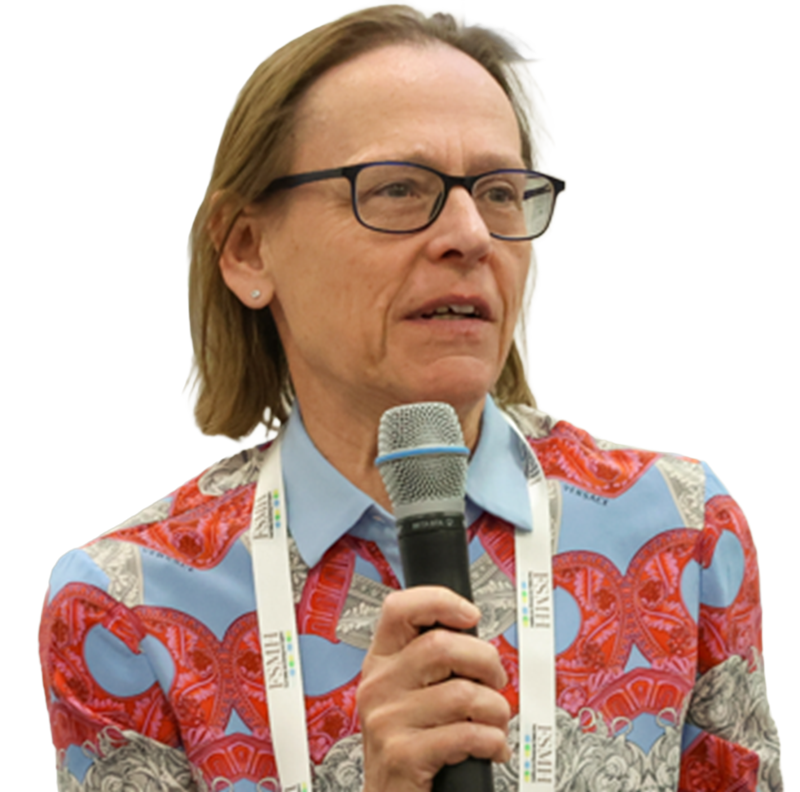
Anett Winkler

Chair of the ILSI Europe Microbiological
Food Safety Task Force
Member of AgroFOOD Industry Hi Tech's Scientific Advisory Board
Anett Winkler joined Kraft Jacobs Suchard in December 1998 to head up the research microbiology laboratory in Munich. Later on Anett concentrated on chocolate, biscuits and other low moisture foods including supplier developments and approvals. She also consolidated the scientific basis for microbiological process controls in low moisture foods by performing validation studies for nut & cocoa processing. Following a regional role for Microbiology in the Eastern European, Middle East & African Region she was globally designing food safety programs, rolling out training modules related to food safety and further supporting supplier development. Anett was also the global expert for thermal processing within Mondelez International.
In October 2017 Anett moved to a new position as “EMEA Food Safety Advisor” at Cargill, where she is supporting all Cargill businesses in that region (Europe / Middle East / Africa) for microbiological / food safety related topics. Anett is active in EHEDG (Chair of water management group), in ILSI Europe (Chair of Microbiology Food Safety TF), and a member of ICMSF. Within Germany she is also co-editor of the Handbook on Food Hygiene.

What are the main priorities of the Microbiological Food Safety Task Force, and how do they reflect the evolving landscape of food safety in Europe and globally?
The ILSI Europe Microbiological Food Safety Task Force focusses on microbiological food safety and also quality issues that can be addressed by dedicated and nominated expert groups. The outcome of our activities are reports providing reviews, collecting relevant data and outlining research gaps thereby paving the way to new studies to close them. Within the Task Force, members:
- assess (re-)emerging microorganisms to address potential issues, before they would become an incident;
- provide and facilitate understanding of the new emerging molecular techniques (like Next-Generation Sequencing (NGS)) which is key in being able to interpret results and use them in food safety management;
- are continuously working on guidance documents for small and medium businesses – including suppliers – and authorities to support them in implementing efficient food safety systems, e.g. on process validation and environmental monitoring in dry food processing.
In that respect members bring in ideas for new activities based on their observations, knowledge of relevant food safety, or quality issues. Ideas are ranked by all members, which defines the order of activities. In order to stay actual, those ideas are being reviewed and new ones added at a regular (at least yearly) basis. In case of an urgent need we are also able to quickly add a new activity, when there is a commitment from all members to do so. An example of the latter was the publication about NGS and its use in the food Industry in 2019 (1).
What do you see as the most pressing microbiological risks in today’s food production systems? Have any new or re-emerging pathogens caught your attention?
In the past years what we have seen is not so much new pathogens, but rather known pathogens in new food commodities and re-emergence of known ones. Salmonella outbreaks were linked to dry foods – including different nut pastes and nutrition supplements, as well as vegetables like cucumber, tomatoes, onions, ready-to-eat salads and fruits like cantaloupe or coconut. Listeria monocytogenes outbreaks could be linked to ice cream, cantaloupe and blueberries, mushrooms, frozen vegetables, plant-based drinks and meals and even baker’s yeast. Pathogenic E.coli have emerged as pathogens in ready-to-eat salads, sprouts, cucumbers, onions and flour-based products like cookie dough and pizza. Foodborne viruses outbreaks were linked to frozen fruits (especially berries) and semi-dried tomatoes. Besides the known foodborne viruses, Hepatitis E virus became more in focus due to zoonotic transmission in developed countries – and that has been addressed in an ILSI Europe review on food borne viruses in 2018 (2). Also botulism, caused by intoxication due to growth and toxin formation of Clostridium botulinum, has been linked to mayonnaise, pickled boar meat, guacamole and peanut butter.
Reasons for those occurrences are multifold. They include among others a more global supply chain, changing consumer behaviors towards convenient or fresher (not cooked) and plant-based food – where the underlying microbiology and effective controls in processing are often not fully understood, as well as new analytical tools (i.e. NGS – WGS) allowing for rapid detection of much smaller outbreaks.
How important is interdisciplinary and cross-sector collaboration (e.g., One Health approaches) in tackling microbial threats in food systems?
Food is produced all over the world – and starts at agricultural and feed sectors. Threats there can – and do – end up in our food as well. I named recent examples above with fresh fruits and vegetables. They can get contaminated by animal livestock in the vicinity and transmitted by water used for irrigation. We even need to look further and evaluate the effects of weather events and climate change on feed and food production. At the end we will only be successful in combating food-borne diseases by working interdisciplinary and considering the whole chain – or it might be more precise to say considering the circuits on earth food is one part of.
What has been a key achievement or highlight of the Microbiological Food Safety Task Force in recent years?
Our last two publications have been very successful. Both provide guidance to industry. One provides “Guidance on Validation of Lethal Control Measures for Foodborne Pathogens in Foods” (3). The other (“Processing Environment Monitoring in Low Moisture Food Production Facilities. Are we looking for the right microorganisms?”) supports adequate establishment of environmental monitoring programs in low-moisture foods (4). In addition, we hosted a webinar on Cronobacter spp. and infant formula in 2022 (5) providing latest scientific knowledge on that organism following an outbreak in infants.
Could you share any upcoming activities or priorities of the Task Force?
Actually, we are very close to finishing intensive work on a review on microbiological risks related to dried ingredients (herbs/spices/fruits/vegetables). This review will include a tool that could be used in risk assessment of those ingredients. Another ongoing activity is an expert group working on pooling of samples and its implications for results. This activity is meant to explain in detail, what are the advantages and disadvantages – as well as consequences in terms of results – of different pooling approaches. Furthermore, the need for adequate validations in case of pooling will be highlighted. Looking more into the future we decided to work on the role of sporeformers in food quality and food safety.
How does the Task Force translate its scientific findings into guidance or recommendations that can be used by regulators, industry, and other stakeholders?
This “translation” is done by publishing the results of the expert groups’ work in peer-reviewed journals. ILSI Europe expert groups do not perform new research studies but rather evaluate existing data and literature on topics related to food chosen by the Task Force members and summarize that knowledge. It allows others - regulators, industry, researchers, and other stakeholders – to determine their approaches, let it be control strategies or addressing the research gaps highlighted.
What role do you see for new tools such as genomics, AI, or predictive microbiology in shaping the next generation of microbiological food safety management?
I would not say it is “next generation” – as it is applied already now. Clear advantages are evaluation of big data (beyond human comprehension), discrimination of microbes to support food safety/quality investigations and evaluation of microbiomes to better understand microbial ecology - allowing for targeted interactions in the future. Having said that it is a rapidly moving field which has a need for standardization to ensure reliable results – and predictions. So, in essence new tools aim towards allowing for a move from reaction towards becoming more proactive and allowing predictions.

References and notes
Jagadeesan et al, The use of next generation sequencing for improving food safety: Translation into practice, Food Microbiology, 2019, Volume 79, Pages 96-115, https://doi.org/10.1016/j.fm.2018.11.005
Bosch et al, Foodborne viruses: Detection, risk assessment, and control options in food processing, International Journal of Food Microbiology, 2018, Volume 285, Pages 110-128, https://doi.org/10.1016/j.ijfoodmicro.2018.06.001
Ceylan, E., Amezquita, A., Anderson, N., et al. Guidance on validation of lethal control measures for foodborne pathogens in foods. Compr Rev Food Sci Food Saf. 2021; 20:1−57. https://doi.org/10.1111/1541-4337.12746
Bourdichon et al, Processing environment monitoring in low moisture food production facilities: Are we looking for the right microorganisms?, International Journal of Food Microbiology, 2021, Volume 356, https://doi.org/10.1016/j.ijfoodmicro.2021.109351
ILSI Europe webinar “Cronobacter in the Spotlight: New Insights Into a Known Organism”, 13 July 2022: https://ilsi.eu/event/iafps-cronobacter-in-the-spotlight-new-insights-into-a-known-organism/