ALTERNATIVE PROTEINS
Meeting the continued need for protein more sustainably
Fréderic Fernandes
Product Manager Functional Proteins at BENEO, Tienen, Belgium

About the Author
Fréderic Fernandes
Fréderic Fernandes - With a background as an agricultural engineer, Fréderic joined BENEO in 2022 as a product manager for the functional protein lines. He is passionate to bring his knowledge into practice and highly values innovative and sustainable technologies.

KEYWORDS
Plant-based protein
protein trend
faba bean protein concentrate
plant-based recipe formulation
sustainability
Precision fermentation
Abstract
Consumer demand for protein is rising due to a range of factors, including interest in weight management and fitness. The number of producers launching protein-enriched foods looks set to continue its growth trajectory. With consumers wanting more plant-based protein due to health, environmental and animal welfare concerns, producers are looking to ingredients such as faba beans to meet demand. Sustainable, technical and nutritional aspects, as well as recipe formulation are discussed, alongside key insights demonstrating the growth curve related to plant-based innovations.
Protein popularity drivers
Consumer demand for protein is rising due to a range of factors. For today’s digital natives, their love of protein is in part being driven by what they are exposed to on social media. Many consumers are now looking to social media for advice on how to support their health and wellbeing. In fact, figures show that 36% of UK 16–34-year-olds are now learning about heathy eating from wellness creators (1) rather than other more traditional sources. With social media platforms increasingly amplifying messages from influencers connecting exercise and fitness with high protein consumption, this has seen the protein trend surge, and its popularity looks set to continue.
Alongside this, more consumers are selecting their foods based on the product’s nutritional benefits, and whether it meets their personal health and functional nutrition goals (2). Thanks to the health halo that social media and the wider fitness industry has created around the consumption of protein for muscle growth, this is fuelling demand, along with other drivers such as a need for energy and stamina and for weight management (3). As a result, protein is proving a very popular choice, with 81% consumers across the globe saying they are (extremely) interested in it (4), and 2 out of 5 saying it is the most important ingredient to them (5).
Health halo
The health halo of protein has been derived from its role as being essential for maintaining overall health and wellbeing, playing a central role in numerous vital body functions. It is particularly important for growth, development, and the repair of tissues, making it indispensable throughout all life stages. Beyond its structural role, protein supports muscle maintenance and growth, bone health, immune defence, and metabolic processes, including energy provision.
The future looks good for protein
With protein continuing to be a major focus for consumers (5), the number of producers launching protein-enriched foods looks set to continue its growth trajectory. Forecasts predict the high protein-based food market will increase by USD 50.2 billion and a CAGR of 8.65% between 2024 and 2028 (6). However, a subtle shift in demand is underway, as the market responds to changing consumer requirements. Although animal proteins are still dominant, more consumers are bolstering their protein consumption with plant-based options. In fact, figures now show that 63% of consumers are (extremely) interested in plant-proteins (4) and the plant-based protein market is expected to grow at a CAGR of 7.9% between 2025 and 2030 (7). This development is also fuelled by the fact that almost 1 in 3 consumers globally now identify as flexitarian, and 4 in 5 consumers have already adopted, or are on their way to adopting, a meat-reduced lifestyle (8).
Another area of growing interest for consumers is the consumption of protein to support weight management. New research findings support this trend, with figures showing that almost half (49%) of UK consumers are eating more protein so that they stay fuller for longer, helping them stay in a calorie deficit, and 44% have upped their protein intake to help with weight management (9). In fact, globally, 1 in 2 consumers who actively try to manage their weight say they’ve made adjustments to their diet (10). This growing trend is being responded to by the food industry, with figures showing there has been a 10% year-on-year growth in new product launches featuring a weight management claim (11).
A global consumer survey (12) also revealed the key health benefits people associate with protein. More than half of consumers associate this nutrient with supporting muscle mass (57%), followed by supporting weight management (37%) and supporting energy levels (32%). This highlights the potential for attractive labelling opportunities for manufacturers developing protein-enriched products.

Plant-based protein in focus
Demand from consumers for plant-based protein is driving plant-based recipe reformulation. This is largely thanks to rising awareness around sustainability issues, animal welfare and understanding of the benefits of more plant-focused diets for reducing the risk of heart disease, type 2 diabetes, certain cancers and obesity. There has also been an evolution in the plant-based arena, with growing interest amongst producers and consumers alike in hybrid, partial meat, fish, egg or dairy replacement recipe reformulations, which can deliver cost, sustainability, taste and texture benefits.
According to research, consumers find plant-based protein sources, such as nuts, seeds, grains and pulses/legumes to be more appealing than meat sources like beef and pork (13). Although soy, wheat and pea are the most dominant protein sources in the plant-based category at present, the beans and seeds protein category is among the fastest growing in Europe, with a CAGR of 9.1% between 2023 and 2028 (14). This is likely due to their perceived health benefits, sustainability credentials and versatility for protein enrichment in a wide range of applications.
Plant-based protein: Differences between isolates and concentrates
When it comes to recipe formulation using plant-based protein, producers can use either plant-based protein isolates or concentrates. These deliver added protein and other benefits in their finished products but there are key differences between the two in terms of protein content and processing.
Isolates are popular because they usually provide a protein content of over 80%. However, they undergo extensive processing to remove the non-protein components, often involving solubilizing the protein in water, followed by precipitation (often via pH shifts) and drying (e.g., spray drying). This requires more energy, water, and processing chemicals compared to concentrates, which also increases their cost.
Concentrates on the other hand are produced via a dry fractionation in a mechanical process which involves separating the protein and starch without water or solvents via air classification. Protein concentrates typically contain 60-80% protein but they also retain more of the original plant’s natural nutritional ingredients such as fibre, starches and micronutrients. As a result, they can deliver better functionality than isolates in certain applications where texture and binding are crucial, such as baked goods and meat alternatives or thickening sauces. Also, as concentrates undergo less processing than isolates, they align more with consumer demand for clean label products.

Plant-based recipe formulation
Ultimately, taste and texture remain key when it comes to creating products that will appeal to the end consumer. Over two-thirds of global consumers consider taste and texture as the most important factors when evaluating a protein source (15). No matter how healthy or sustainable a product may be, if it doesn’t taste good or have the right mouthfeel, consumers simply won’t be convinced. Therefore, this must remain a key area of focus for plant-based and hybrid protein recipe formulation.
As well as balancing consumer taste and texture expectations when replacing animal protein, plant-based protein needs to fulfil a range of other functions. These include nutritional aspects like blending plant proteins from different sources for a complete amino acid profile or fortification with specific amino acids if needed, and managing any technical properties that perform differently to animal-derived protein, such as how the ingredient gels or emulsifies. As faba bean protein concentrate overcomes many of these challenges, its popularity is increasing among producers.
Faba beans on the rise
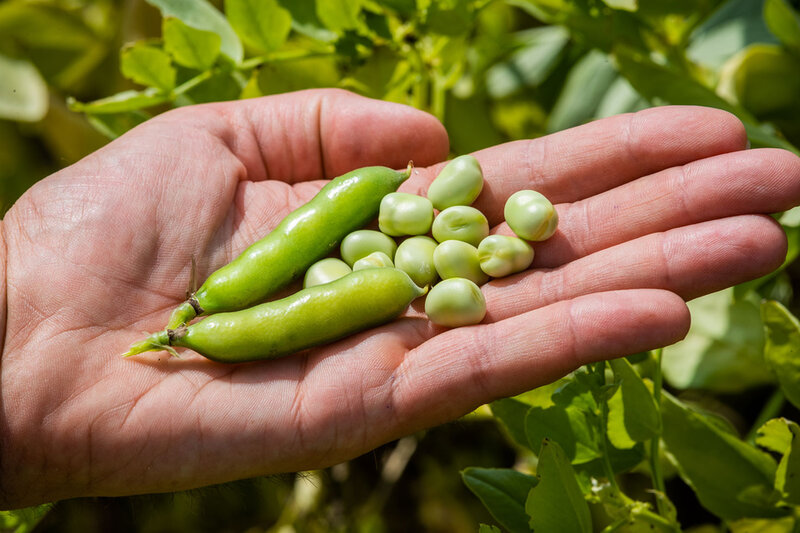
Faba beans are packed with nutrients, offering a high protein content compared to other pulses and containing starch and dietary fibres (including both soluble and insoluble fibres), as well as B-vitamins and minerals (high in iron, selenium, zinc). In addition, they are naturally low in fat and are not a food allergen, unlike soy for example which requires allergen labelling on pack. This makes faba bean a valuable protein alternative to pea and soy for a broad range of product applications.
Faba bean protein concentrate has a light-yellow colour and a mild beany taste that has minimal impact on the end product. Its excellent amino acid profile is particularly rich in lysine and allows for a complete essential amino acids profile when combined with cereal protein such as rice protein. The protein concentrate also boasts excellent functional properties, including emulsifying, foaming, thickening, and binding (16).
The main applications for faba bean protein concentrate include egg replacement or protein enrichment in baked goods, dairy alternatives, vegan smoothies and other drinks and sports nutrition blends, bars etc. It can also be used in vegan dressings thanks to its excellent emulsifying properties as well as in meat and fish alternatives due to its good texturizing and water binding properties. Faba bean starch-rich flour, on the other hand, is predominantly used to boost the protein content in applications such as cereal bars, snacks, or baked goods.
Part of the appeal of using faba bean as a protein enrichment source is its versatility as well as its sustainability credentials. It is a resilient crop that, along with other plant proteins, has lower carbon emissions than animal protein and can be grown easily in the northern hemisphere (17). As well as reducing logistical costs for European producers, further supply chain security can be achieved by local processing. A case in point is BENEO’s recently opened pulse-processing plant in Germany, that enables locally grown faba beans to be cost-effectively processed into ingredients for food and animal feed production.
With such an array of major consumer trends set to continue driving protein popularity, demand for this key nutrient is not expected to slow down any time soon. Plant-based alternatives such as faba bean protein concentrate provide a promising option for reformulation, helping manufacturers maintain product quality and stable recipe prices while meeting consumer demand for more sustainable and naturally sourced ingredients.
References and notes

References and notes
- Mintel Insights. 2025. UK Attitudes towards Healthy Eating Consumer Report 2025. Available from: https://store.mintel.com/report/uk-attitudes-towards-healthy-eating-market-report
- McKinsey & Company. The State of Grocery Retail Europe. 2025. [Internet]. Available from: https://www.mckinsey.com/industries/retail/our-insights/state-of-grocery-europe-report#/
- Innova Trends 2024. [Survey]. Innova Health & Nutrition 2023 (average of Brazil, Canada, China, France, Germany, India, Indonesia, Mexico, Spain, UK, US). [Survey]
- HealthFocus International. Global Trends Study. 2024. [Internet]. Available from: https://www.healthfocus.com/2024-global-trend-study/
- Innova. Now & Next in Protein Global Report. 2024. [Internet]. Available from: https://www.innovamarketinsights.com/trends/protein-trends-global/
- Technavio. High Protein-based Food Market Analysis North America, Europe, APAC, South America, Middle East and Africa - US, China, France, Germany, Russia. Size and Forecast 2024-2028. [Internet]. Available from: https://www.technavio.com/report/high-protein-based-food-market-industry-analysis
- Markets and Markets. ‘Plant-based Protein by Source – Global Forecast to 2030’. [Internet]. Available from: https://www.marketsandmarkets.com/Market-Reports/plant-based-protein-market-14715651.html
- BENEO. Global Plant-Based & Meat Hybrids 2023. [Survey]. Dynata conducted an online quantitative survey in January 2023 in Germany, UK, France, Spain, Poland, USA, Brazil and Thailand (Total sample = 6167).
- Ocado Retail. ‘Demand for high-protein foods soars, fuelled by social media trends and the shift from ultra-processed foods’. 2nd Mar 2025. [Internet]. Available from: https://ocadoretail.com/media-centre/press-releases/demand-for-high-protein-foods-soars-fuelled-by-social-media-trends-and-the-shift-from-ultra-processed-foods/
- Innova Report. Trending in Weight Management Global. Nov 2024. [Internet]. Available from: https://www.innovamarketinsights.com/trends/global-weight-management-trends/
- Innova. Jul 2023-Jun 2024. Global. [Database]
- BENEO. Global Healthy Ageing. 2024. [Survey]. N=4498. One Inch Whale conducted a quantitative online survey in July 2024, age range: 20-75 years, (N = ±1000 per country, USA, Mexico, UK, France, Spain, Germany, Poland, Thailand and Japan).
- BENEO. Global Plant-Based and Meat Hybrids. 2023. [Survey]. Global (N = 6167) Q. How appealing do you find the following sources of protein?
- Markets and Markets. Analysis On The Plant-Based Protein Market. [Internet]. Available from: https://www.marketsandmarkets.com/Market-Reports/plant-based-protein-market-14715651.html
- BENEO. Global Plant-Based and Meat Hybrids. 2023. [Survey]. Global (N = 6167) Q. How important are these factors for you when evaluating a protein source on an ingredient list?
- Handbook of Plant-Based Food and Drinks Design. 2024. Niederlande: Academic Press OR Hernández-López, Israel, Jordi Ortiz-Solà, Cristina Alamprese, Lillian Barros, Oren Shelef, Loai Basheer, Ana Rivera, Maribel Abadias, and Ingrid Aguiló-Aguayo. 2022. "Valorization of Local Legumes and Nuts as Key Components of the Mediterranean Diet" Foods 11, no. 23: 3858. https://doi.org/10.3390/foods11233858
- Joya-Barrero, C. Huguet, J. Pearse. 2023. Natural and anthropogenic sources of cadmium in cacao crop soils of santander, Colombia Soil Sys., 7 (2023), p.12
