Consumer perspective
— Column
The magic marketing for mushrooms
KEYWORDS
Functional Mushrooms
Aspirational Marketing
Wellness
Consumer Behavior
USDA/FDA
Alternative protein
About the Author
Kathryn Ambroze
Behavioral Scientist and User Researcher, JP Morgan Chase
Kathryn Ambroze is a behavioral neuroscientist with experience in consumer research and methodological innovation. She earned her Bachelors in Neuroscience and Business from Muhlenberg College and her Masters in Behavioral and Decision Sciences at the University of Pennsylvania. She currently works at JP Morgan Chase as a VP Experience Researcher, infusing behavioral science and design thinking into the customer experience.
*The views and opinions expressed are solely those of the author and do not necessarily reflect the official policy or position of any affiliated organization, employer, or company.


Abstract
Bioactive compounds in mushrooms are linked to health benefits for cognitive function, immune support, and overall well-being. While modern research continues to learn about the value of the 16,000 different types of edible mushrooms identified, Traditional Chinese medicine (TCM) has utilized these fungi for medicinal purposes for centuries. The growing consumer demand for natural health solutions has fueled explosive market growth, with the global functional mushroom industry projected to reach $65.8 billion by 2030 (1). Today, mushrooms appear in diverse products ranging from supplements and gummies to mushroom-infused chocolates and coffees. However, companies may use mushrooms in everyday products as a marketing strategy rather than meaningful nutritional improvement. Understanding the various factors that influence purchasing decisions, beyond basic health needs, helps explain why consumers may choose to purchase mushroom-infused products rather than the mushroom itself.
Introduction
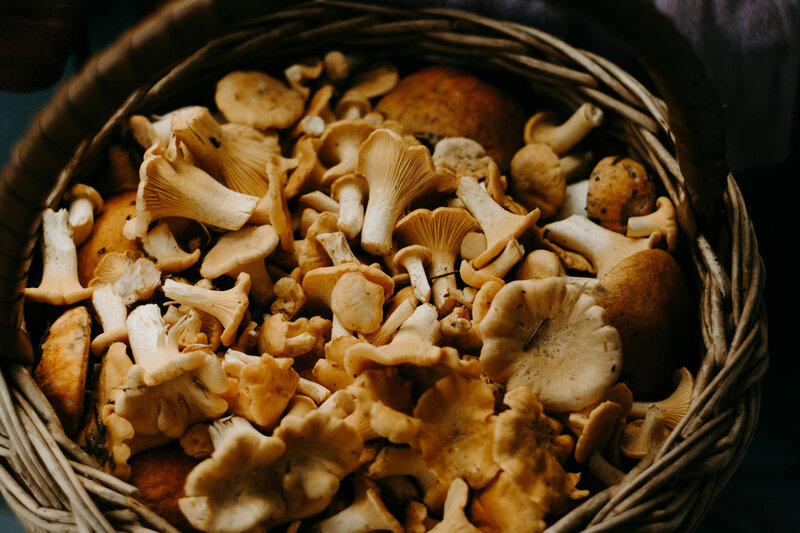
Popular functional mushrooms like Lion's Mane, Shiitake, Reishi, and Turkey Tail are readily available at most grocery stores and remain surprisingly affordable despite extensive research documenting their health benefits (2), (3). Mushrooms are frequently called out for being rich in nutrients and having bioactive compounds that have benefits like having a stronger immunity, brain health, and stress response. While the wellness industry increasingly is spotlighting mushrooms for these adaptogenic benefits, there is a major push for products like supplements or powders to incorporate mushrooms. Although these processed products are marketed as "natural, plant-based solutions," their price reveals a striking paradox: consumers are leaving the most natural and cost-effective option, fresh mushrooms, in favor of products that include mushrooms as an “added-benefit”. Abandoning whole mushrooms for more processed products begs the question about what is the true driver in this mushroom-mania: the health benefits, the marketing, or something else entirely?
Finding self through shrooms
Consumers interested in wellness products are often drawn into the space because of the message being conveyed. Everything from the colors and the fonts to the ad or influencer using the product pushes a specific type of experience, with a specific type of mood. The wellness space, which extends to the functional mushroom realm, focuses on the characteristics targeted consumers are yearning for: a sense of balance, calm, or energy, immune support, or rejuvenation. Mushrooms are the perfect candidate to be the “it” food because of its long history of being utilized for both medicinal and nutritional purposes. Additionally, there is a vast amount of ongoing research evaluating mushrooms' impact on digestive and cognitive wellness (3). Consumers who want a more holistic approach to health may find the background literature on mushrooms enticing because it spans from therapeutic applications to pharmacology. Mushrooms uniquely sit at the intersection of eastern and western medicine.
The consumer interest in mushrooms, from both a research and entrepreneurial perspective, drove the use of mushrooms in various forms. Companies that incorporate mushrooms into their products, whether it be a cookie, tea or powder, can emulate the sought-after wellness characteristics through branding that helps customers feel closer to that ideal state. A product that incorporates mushrooms into its ingredients and is promoting messaging around a healthy body and mind is much more attractive compared to just checking something off the grocery list when picking up mushrooms in aisle four. The motivation to buy the item is not so much about the product itself, but what the product represents.
Consumers naturally gravitate toward brands that reflect their self-image (4). This is due to confirmation bias, the tendency to interpret new information as supporting existing beliefs and is innately part of how consumers make decisions. Therefore, products that promote a wellness-conscious lifestyle will garner the attention of consumers who connect with that mission. By crafting a narrative that positions mushroom-based products as essential tools for achieving a stress-free healthy lifestyle, brands can transform these items from mere wants into perceived needs.
The perception of premium pricing
The average cost of fresh shiitake mushrooms in the United States is around $12.49 per kilogram or $5.67 per pound (5). Meanwhile, mushroom-infused products have a range in their pricing. Beam, a functional wellness company that incorporates different types of mushrooms into their products, sells everything from a greens powder that includes a mushroom blend of Reishi, Chaga, Turkey Tail, Maitake and Shiitake for $35 to sleep capsules with Reishi for $50. The company, Alice Mushrooms, advertises the use of functional mushrooms in chocolates for $60 for two tins. The wellness products are clearly inflated compared to the natural product. Yet, these prices are often what lead consumers to believe that they are purchasing something of higher quality.
Prices serve signals to consumers. Consumers purchase a product with premium pricing, they justify the expense as having value through the benefits or statements spelled out on the packaging or website. Yet, not all marketing claims are backed by scientific evidence. Both Beam and Alice Mushrooms include a disclaimer about the statements on the website not being approved by the Food and Drug Administration (FDA). Regulatory gaps within the wellness space allows companies to mention the general benefits of mushrooms without detailing the type or amount needed to achieve the desired outcome. Insufficient levels, ineffective forms, or the use of fillers may compromise the product’s ability to perform its promises. In many cases, premium pricing and polished branding create an illusion of quality, leading consumers to buy the marketing narrative rather than the actual health benefits.
The cost of convenience and control
As consumers navigate an increasingly uncertain health and wellness landscape, they face a barrage of sophisticated marketing tactics designed to shortcut critical thinking. Companies routinely deploy scientific terminology, dropping technical names like Hericium erinaceus for Lion's Mane, to build legitimacy. This strategic use of scientific language feeds into consumer overconfidence, leading to purchases that may fall short of expectations. While not all mushroom-based products or companies take advantage of the lack of regulation or consumer education in the space, the combination of significant knowledge gaps and limited definitive scientific evidence creates a murky marketplace where discernment becomes difficult.
The wellness industry has perfected the art of selling simplicity. Their products come with clear, actionable instructions: "Take this tablet daily and move one step closer to better health." This straightforward directive offers consumers an immediate sense of accomplishment. And in a world where authority figures in health and wellness give conflicting recommendations, there is comfort in simple. The need for simple food can extend into the eating behaviors of these consumers, with things like meal planning to include whole mushrooms seeming much more exhausting compared to taking a daily capsule. While tempting to want to trust the quick fix, understanding the marketing strategies in the wellness space is essential for those who truly want to make an informed decision.
Closing
The wellness industry, and more specifically functional mushrooms, are a great example of how complex the relationship between health, identity, and buying behavior. Mushroom marketing within the wellness space targets productivity and self-optimization desires. By creating products that appear to serve multiple purposes, this strategy can make any item with mushrooms in it seem more valuable. Wellness brands frame the messaging in a way that emphasizes the benefits like stress management or immunity that align with modern concerns. Highlighting the flashy benefit does not ensure that the product will fulfill its promise, as many supplements and tablets do not have sufficient levels of mushrooms in their product to produce that type of outcome.
Connecting with consumer vulnerability is how the wellness industry can take super food fads and turn them into viral moments, even if the spin-off products are ineffective or the food itself is nutrient dense. Simple solutions, like eating mushrooms in meals, often are the most economical and effective way to take advantage of the potential benefits. Consumers are not immune to the psychological factors that override practical considerations, which is why it is important to self-reflect on the purchases and companies to determine what type of “magic mushroom” truly is the best product for their needs.

References and notes
- Bourgeois, H., Elliott, D., Marniquet, P., & Soulard, Y. (2006). Dietary behavior of dogs and cats. Bulletin de l'Académie vétérinaire de France, 159(4), 301-308.
- Calderón, N., White, B. L., & Seo, H. S. (2024). Measuring palatability of pet food products: Sensory components, evaluations, challenges, and opportunities. Journal of food science, 89(12), 8175-8196.
- Cao, M. (2014). How owners’ anthropomorphic tendencies associated with their feeding method towards their pets, and ultimately influence the pets’ weight status. Wageningen University: Wageningen, The Netherlands.
- Cosgrove, N. (2025, January 22). 10 Dog Food Trends in 2025: Pet Food Industry Facts & Statistics. Dogster. Retrieved September 8, 2025, from Dogster website.
- Hoffman, C. L., & Suchak, M. (2017). Dog rivalry impacts following behavior in a decision-making task involving food. Animal Cognition, 20(4), 689-701.
- Johnson, A. C., Miller, H. C., & Wynne, C. D. (2023). How dog behavior influences pet owner’s perceptions of dog preference for dental chews. Animals, 13(12), 1964.
- Serpell, J. (2002). Anthropomorphism and anthropomorphic selection—beyond the" cute response". Society & Animals, 10(4), 437-454.
- Wellness Pet Food. (n.d.). Wellness Bowl Boosters Functional Topper – Digestive Health. Retrieved September 8, 2025, from Wellness Pet Food website: https://www.wellnesspetfood.com/product-catalog/wellness-bowl-boosters-functional-topper-digestive-health/