Panel discussion on...
ESG & Strategic Partnerships in Pharma Supply Chain


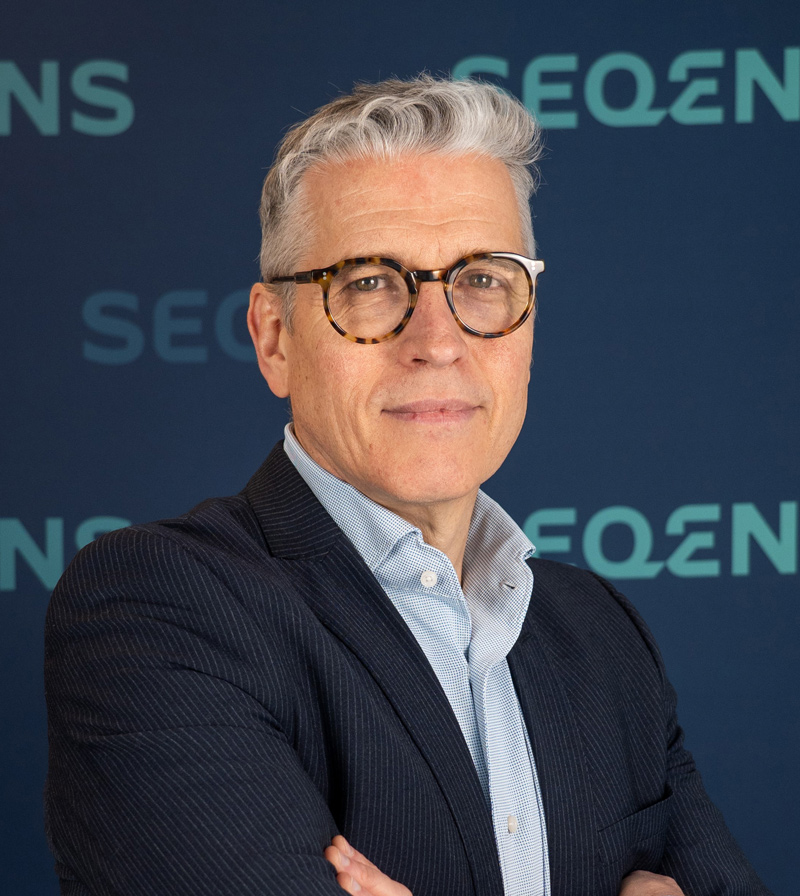
Pascal Villemagne
CEO, Seqens

ESG and Supply Chain Resilience: Two Sides of the Same Coin
For years, sustainability and supply chain performance lived in separate conversations. One dealt with environmental impact and corporate responsibility, the other with cost, quality, lead times and security of supply.
That separation no longer makes sense.
Climate change, geopolitical tension, shifting regulation, shortages of critical raw materials, rising energy costs, and growing demands for transparency are reshaping how pharmaceutical supply chains operate. Across the industry, ESG and supply chain resilience are converging into a single agenda.
This shift has been built for a while. Sustainability has moved from a compliance checkbox to a strategic variable that shapes where companies manufacture, how they source, and who they choose as partners.
The real question for the industry is no longer whether sustainability matters. It's how sustainability can create value while strengthening industrial performance, supply security and long-term competitiveness.
The answer increasingly lies in integrating ESG throughout the entire value chain.
From Sustainability to Supply Chain Strategy
One of the biggest shifts in pharma today is the realization that environmental and social factors directly shape supply chain resilience. Climate events disrupt manufacturing and logistics. Geopolitical tension threatens access to critical raw materials. Regulators demand visibility deeper into supplier tiers. And patients simply expect medicines to keep flowing, uninterrupted.
Meeting all of that requires weaving environmental, social and governance considerations into procurement, manufacturing, logistics and strategic planning.
For CDMOs, this means going beyond the traditional trio of quality, cost and delivery. Strategic partnerships now call for transparency, shared sustainability objectives and collaborative risk management. Customers increasingly expect reliable environmental data, product carbon footprints, responsible sourcing, and real visibility across the supply chain.
Turning environmental data into a customer's advantage
ESG is redefining the relationship between pharmaceutical companies and their manufacturing partners. Customers now expect more than quality, cost and security of supply, they expect help reaching their own sustainability goals: lower-carbon product portfolios, optimized manufacturing routes, circular-economy solutions, more sustainable sourcing options, or simply the environmental data needed to make better decisions.
At SEQENS, this is the thinking behind HORIZON, an internal framework that evaluates the environmental and societal impact of products and manufacturing routes at every stage of development. Bringing sustainability criteria into decisions early makes it possible to work alongside customers to find room for improvement and speed up the shift toward more sustainable solutions.
That responsiveness can also take simpler forms. For Methimazole, manufactured at SEQENS' Lahr site in Germany, the product's carbon footprint was calculated proactively and shared with the customer (126 ± 24 kg CO2e/kg, 24% lower than competition) (1). A simple action giving better visibility of the product's environmental impact ahead of its own reporting needs.
Decarbonization, Health Sovereignty and Security of Supply: Not a Trade-Off
A persistent myth in some industries is that sustainability and supply chain robustness require trade-offs. In practice, many initiatives serve both at once.
Take the pharmaceutical industry's push toward reshoring and regional manufacturing. Strengthening local production cuts transportation emissions, improves supply chain visibility, and reduces exposure to geopolitical shocks while also reinforcing health sovereignty, a growing priority as governments and health systems seek more control over the supply of critical medicines.
SEQENS' Paracetamol project illustrates the point: a major industrial investment contributing to the reshoring of a critical API in Europe. Once complete, the facility will be able to produce 15,000 tons of paracetamol API a year, roughly half of European demand. What matters isn't only where the plant sits. After eighteen months of R&D, the manufacturing process itself was redesigned around continuous-flow chemistry, a technology that cuts the carbon footprint of production by 37% (10,8 kg CO2e/kg) (2) while improving industrial efficiency (reduction of energy and water consumption and wastes generation).
Resilience doesn't always mean concentrating production in one place, though. Sometimes it means the opposite. For Aspirin, SEQENS runs a dual-sourcing model across France and Thailand, serving regional markets from geographically closer hubs while limiting disruption risk and reinforcing continuity of supply and proposing a unmatched carbon footprint (production in Saint-Fons (France) is -54% lower vs. competition: 12,2 kg CO2e/kg ) (1).
Innovation and Circularity as Growth Drivers
Innovation is one of the sharpest tools available for improving sustainability and resilience together. Digitalization, automation and advanced analytics boost efficiency, cut waste, and optimize resource use. But innovation must reach further: into the products themselves, the processes that make them, and how resources move across the value chain.
Circularity plays its part too. At the Couterne site in France, partnerships with neighboring industries let some production residues become raw material for paper manufacturing. Waste becomes a resource, and the value created extends beyond the plant's own walls. The same logic applies to solvent recovery performed at our site in Middlesbrough (UK), which reduces the need for virgin raw materials and pushes the pharmaceutical value chain toward more circular models.
The pharmaceutical supply chain of 2030
Looking ahead to 2030, ESG leadership will likely belong to companies that fuse sustainability, transparency and resilience into a single operating model, not to those who treat ESG as a reporting exercise run by a separate department.
The companies that get this right will embed sustainability into procurement, manufacturing, investment decisions, innovation roadmaps and supplier relationships alike, not as a standalone commitment, but as part of the strategic and financial plan itself. At SEQENS, this is reflected in a clear target: by 2030, 10% of revenue should come from sustainable products, with sustainability criteria factored directly into investment decisions and portfolio strategy: a goal already shaping innovation priorities and directing efforts toward markets that support the ecological transition and demand solutions combining performance, reliability and lower environmental impact.
Partnerships will matter more too. No single company can tackle climate change, geopolitical risk and supply chain disruption alone. The path forward runs through closer collaboration between pharmaceutical companies, CDMOs, suppliers, logistics providers, and regulators.
That's changing what "strategic partner" means. Beyond quality, cost and technical expertise, tomorrow's leading partners will be the ones willing to share meaningful sustainability data, contribute to reducing risk, and support long-term resilience.
Pharma has a real opportunity here: to show that sustainability and competitiveness aren't opposing forces, but two sides of the same coin.
Notes
1. This carbon footprint has been independently calculated in accordance with the GHG Protocol and ISO 14067, covering the product's cradle-to-gate life cycle. This carbon footprint therefore takes into account all stages from raw material extraction to production (scopes 1, 2 and 3 upstream).
Panelists

Blake Unterreiner
Vice President and Business Unit Leader, Agilent Advanced Therapeutics


Michael Rainey
Director of Supply Chain, Almac Sciences

Françoise Durand-Rivoire
Global Head of ESG, Axplora

Hans van Hees
COO of Bachem AG

Matthias Müllner
CEO and co-founder of bespark*bio

Kerstin Stangier
Head of Corporate Development, Governance & Sustainability, BioSpring

Yann Dherve
Chief Executive Officer - CDMO, Cohance Lifesciences

Roger La Force
Managing Director, Dorra Pharma Group

Joanne Flinn
Chair, The ESG Institute


Xavier Touche1, Alain Goasguen2
1. Global Head of Supply Chain at Euroapi
2. Head of Environment & Energy at Euroapi

Anne Lise Kopp
Corporate ESG & Transformation Leader, Flamma Group

Robert Dream
Managing Director, HDR COMPANY LLC

Nathalie Huther
Chief Commercial Officer, HFR

Justin Mason-Home, FRSC
Owner/Director, HPAPI Project Services Limited

Patrizia Fazio
Head of applied research coordination, Imprima

Laura Monti
Responsible Sourcing - Purchasing department, Indena

Stanislav Kazanov
Head of GRC, Cybersecurity & Sustainability, Innowise

Sonja Merkas
Founder and CEO, Livinovea

Verena Buback
Head of Sustainability Strategy, Merck Procurement

Dirk Kirschneck
Strategic Director,
Microinnova Engineering GmbH

Saharsh Davuluri
CEO & Managing Director, Neuland Laboratories

Tammy Cooper
President, Nitto Avecia and
Nitto Avecia Pharma Services



Shaojun Zhu1, Dongxin Zhang2, David Ennis3
1. Director of Sustainability Development, PharmaBlock
2. Executive Director and Head of Business for New Modalities, PharmaBlock
3. Executive Advisor, PharmaBlock

Peter DeYoung
CEO, Piramal Global Pharma


Sonia Rasi1, Michele Tappa2
1. Financial Director & Chief Sustainability Officer, Procos
2. ESG Manager, Procos
Pascal Villemagne
CEO, Seqens

Darryl Ratty
Executive Director, Global ESG, SK pharmteco


Natalia Agüeros1, Ralf Karch2
1. Sr. Director, ESG & Sustainability, Umicore
2. Director BU Research & Development at PMC, Umicore

Dani Reguant
Supply Chain Director, Uquifa Group