Panel discussion on...
ESG & Strategic Partnerships in Pharma Supply Chain

Justin Mason-Home
FRSC Owner/Director HPAPI Project Services Limited


What’s More Important? Environment, Product, Corporate Reputation or Worker Protection?
A long time ago I was an environmental consultant working for a global consultancy firm as a senior professional. I travelled the world, auditing a panoply of industrial processes; from minerals and metals processing, petrochemicals, fine chemicals, exotic physical/chemical processes, microelectronics, aerospace, transport, through to the food industry and many more besides. I didn’t do the green ‘bugs and bunnies’ stuff, I did the hard-nosed chemistry and chemical engineering stuff, using fundamental chemistry, physics and mathematics to calculate resources put in, and emissions from, massive scale projects, to assessing energy usage and waste generation, to assessing commercial and financial liabilities…..and more besides.
Prior to that, I was a chemical industry corporate environmental manager, doing the science (chemistry, physics and maths again) to calculate emissions from processes and using computer modelling (as good as it was in the 1990’s) to determine the effects of emissions in terms of environmental impact. I was in the right place at the right time and worked with smart people and learned about corporate environmental management, environmental law and liability management……and more besides.
And then. One day. A biopharmaceutical company presented with some sick people, who it turned out had been exposed to some truly, really highly potent and toxic active pharmaceutical ingredients (APIs) at work, and so my journey into potent drug occupational health and safety began. Serendipitously, I was connected instantly with John Farris and Dr. Robert Ku (both retired and previous authors in Chemistry Today), and others, and together we worked out what were the causative agents, dragged in the resources needed and managed recovery of the company and the people. It was the best and most radical work we ever did. High science, high stakes and great fun. We became friends first, business colleagues second and had a ‘do-whatever it-takes’ mentality. Money and business were secondary. Shortly afterwards, Farris, Ku and others formed SafeBridge Consultants, Inc. in the San Francisco Bay area, and rolled out potent drug safety like no others had done previously. In 2005 I was invited to open a Europe office and SafeBridge Europe was formed. I had a magnificent 11½ years through 2016 and continue to do so in my own company since.
Health and Safety is a hard sell. It’s a cost with a difficult-to-see payback…but it’s there. One doesn’t easily see a return on investment (ROI) in health and safety…but it’s there. If you think about it, every health and safety accident is the same; all is well and then a tipping point comes along, the dominoes fall and an accident/incident occurs. Everything was just fine and then suddenly it isn’t.
The day prior, 2,4,5-trichlorophenol was being synthesised from 1,2,4,5-tetrachlorobenzene just fine, then at 12:37 PM on 10 July 1976, a chemical reaction was not being monitored or managed well enough, and a known chemical potential runaway reaction occurred releasing approximately 15 – 30 Kg of tetrachlorodibenzodioxin into the air which was distributed over 100s of hectares of land. And so the Seveso Dioxins incident occurred. Laws came into force because of this.
On 14th April, 1912, a ship was quite happily sailing on its route from England to New York, all was fine and then it wasn’t. Laws came in after this too.
Many accidents happen this way if you think about it – all is fine and then it’s not. Have you ever cut your finger peeling vegetables? You know the hazard (sharp knife), you know the risk (cut your finger) and you know the consequences (hurt finger)….but you know the control – be careful, cut away from you, use a sharp knife, etc……but….you still cut your finger! Accidents happen.
Bear with me. I know this is a little left field.
Health and Safety is important for many reasons which I’ll come to, but why-oh-why is health and safety just not as COOL as Environment (and social and governance)?
Earlier this year I asked a senior big pharma executive presenting at a pharma conference, “if there is ever a conflict between environmental protection and worker protection [H&S], which comes first?”. I was deeply encouraged when he said, without a moment’s hesitation, “Worker Safety”.
Most [pharma] companies publish a corporate health and safety policy (which IS social and which IS governance), which invariably says something along the lines that ‘our people are our most important asset’ and continue to explain how worker safety will be protected. But where is the public singing from the rooftops and glowing corporate distributed reporting that you don’t see about health and safety but that you do see about ESG?
Surely occupational health and safety is more important. H&S comes directly under the criminal law; ESG doesn’t. Maybe it’s because you can measure Environmental performance parameters more easily. Meters can measure power consumed and differences and trends can be readily presented in pretty graphs. Balances (massing machines as my physics teacher used to call them!)) can measure mass and losses can be calculated and hence mass efficiencies.
Considering exposure to hazardous substances (E is ‘exposure’ of the Environment to hazardous substances), monitoring worker health parameters can be a bit more difficult. Sure, we can monitor in real-time using direct-reading calibrated techniques for volatile organic compounds (VOCs; solvents), toxic gases and even for radiation, but for Pharma substances, that is Active Pharmaceutical Ingredients, we can’t. Presenting API non-homogenous particulate matter (powder) in air to a sensor in any substance speciated way, has not been done and is unlikely in my lifetime. Handling [highly] potent APIs involves much more uncertainty than handling any other hazardous substance. But then uncertainty is what science is all about – right?
I am sure we all know deep down that there is true value in managing pharma occupational health and safety well, but maybe it is worth spelling out some reasons why:
- Designing processes, projects, facilities and operational procedures on systematic and scientific basis, simultaneously discarding ‘emotional positioning’ leads to construction of robust and defensible assets and avoids the development of ‘emotional’ follies and liabilities
- A healthy, confident, empowered, knowledgeable, risk-aware (not risk blasé or risk paranoid), well-trained workforce is more engaged and productive
- Effective management and avoidance of business interruption, as well as internal worker confidence and trust in corporate management that their health is being cared for, makes for robust and retained workforces
- Potent drug safety, properly undertaken, well understood, accurately described and properly articulated can underpin confidence and company reputation both internally and in the marketplace. A lack of confidence and poor reputation can act as a commercial drag on a company, sometimes for many years
My kids might disagree with me, but API occupational health and safety is COOL. At its best it is high science. In an environment where it is all too easy for the ‘emotional’ to dominate, biopharma companies should use the same degree of scientific rigour that is used elsewhere in their businesses, such as in drug product Quality. When we want to give a drug to a sick patient, do we ever take an ‘emotional’ position that, “this is always the way we’ve made it, nothing’s changed, it looks like it did last time, just pack it up and inject it into the patient”? No, we don’t. We TEST and PROVE that the drug is safe and effective.
The same degree of scientific rigour should be used to protect workers. It costs less.
Panelists

Blake Unterreiner
Vice President and Business Unit Leader, Agilent Advanced Therapeutics


Michael Rainey
Director of Supply Chain, Almac Sciences

Françoise Durand-Rivoire
Global Head of ESG, Axplora

Hans van Hees
COO of Bachem AG

Matthias Müllner
CEO and co-founder of bespark*bio

Kerstin Stangier
Head of Corporate Development, Governance & Sustainability, BioSpring

Yann Dherve
Chief Executive Officer - CDMO, Cohance Lifesciences

Roger La Force
Managing Director, Dorra Pharma Group

Joanne Flinn
Chair, The ESG Institute


Xavier Touche1, Alain Goasguen2
1. Global Head of Supply Chain at Euroapi
2. Head of Environment & Energy at Euroapi

Anne Lise Kopp
Corporate ESG & Transformation Leader, Flamma Group

Robert Dream
Managing Director, HDR COMPANY LLC
Nathalie Huther
Chief Commercial Officer, HFR
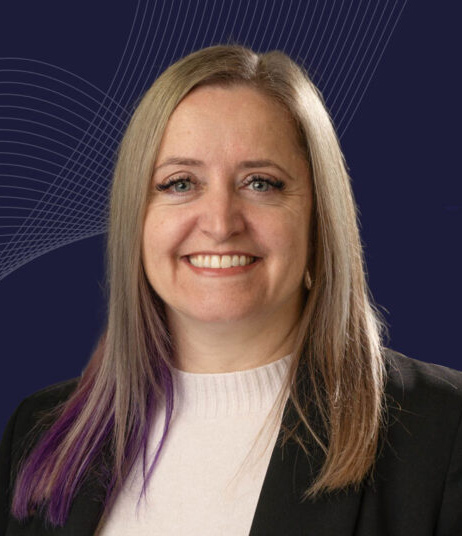
Justin Mason-Home, FRSC
Owner/Director, HPAPI Project Services Limited

Patrizia Fazio
Head of applied research coordination, Imprima

Laura Monti
Responsible Sourcing - Purchasing department, Indena

Stanislav Kazanov
Head of GRC, Cybersecurity & Sustainability, Innowise

Sonja Merkas
Founder and CEO, Livinovea

Verena Buback
Head of Sustainability Strategy, Merck Procurement
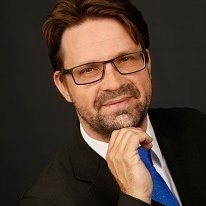
Dirk Kirschneck
Strategic Director,
Microinnova Engineering GmbH

Saharsh Davuluri
CEO & Managing Director, Neuland Laboratories

Tammy Cooper
President, Nitto Avecia and
Nitto Avecia Pharma Services



Shaojun Zhu1, Dongxin Zhang2, David Ennis3
1. Director of Sustainability Development, PharmaBlock
2. Executive Director and Head of Business for New Modalities, PharmaBlock
3. Executive Advisor, PharmaBlock

Peter DeYoung
CEO, Piramal Global Pharma


Sonia Rasi1, Michele Tappa2
1. Financial Director & Chief Sustainability Officer, Procos
2. ESG Manager, Procos
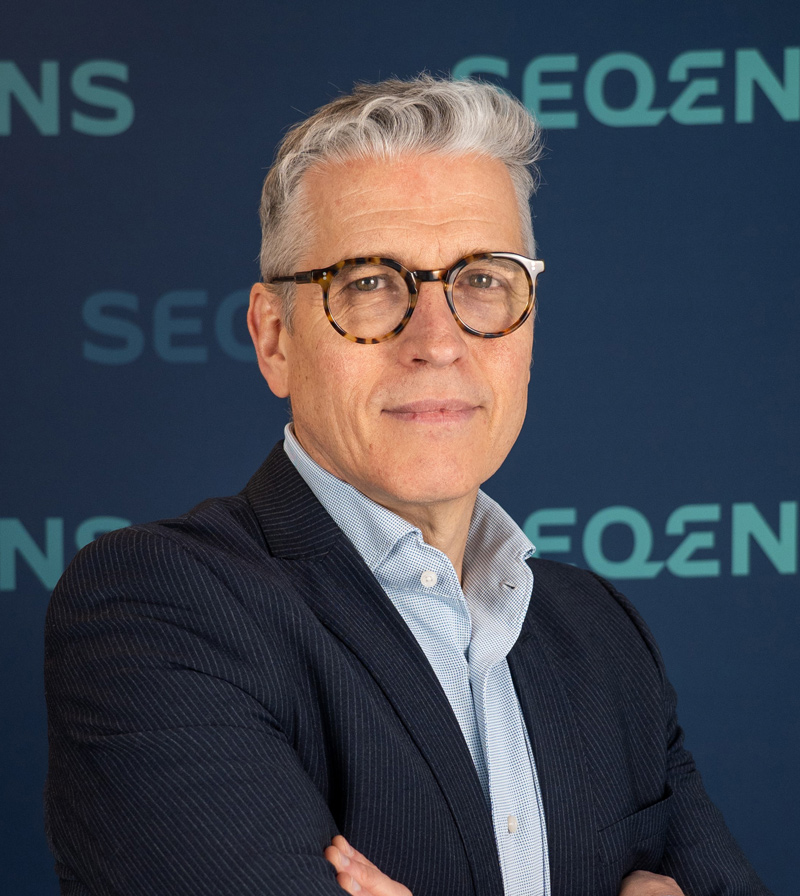
Pascal Villemagne
CEO, Seqens
Darryl Ratty
Executive Director, Global ESG, SK pharmteco


Natalia Agüeros1, Ralf Karch2
1. Sr. Director, ESG & Sustainability, Umicore
2. Director BU Research & Development at PMC, Umicore

Dani Reguant
Supply Chain Director, Uquifa Group
References and notes
- Howes, M.J.R., Simmonds, M.S.J. and Kite, G.C. (2004) 'Evaluation of the quality of sandalwood essential oils by gas chromatography–mass spectrometry', Journal of Chromatography A, 1028(2), pp. 307-312. doi: 10.1016/j.chroma.2003.11.093.
- RTI Health, Social, and Economics Research (2002) 'The Economic Impacts of Inadequate Infrastructure for Software Testing', Report prepared for the National Institute of Standards and Technology (NIST), Gaithersburg, MD.