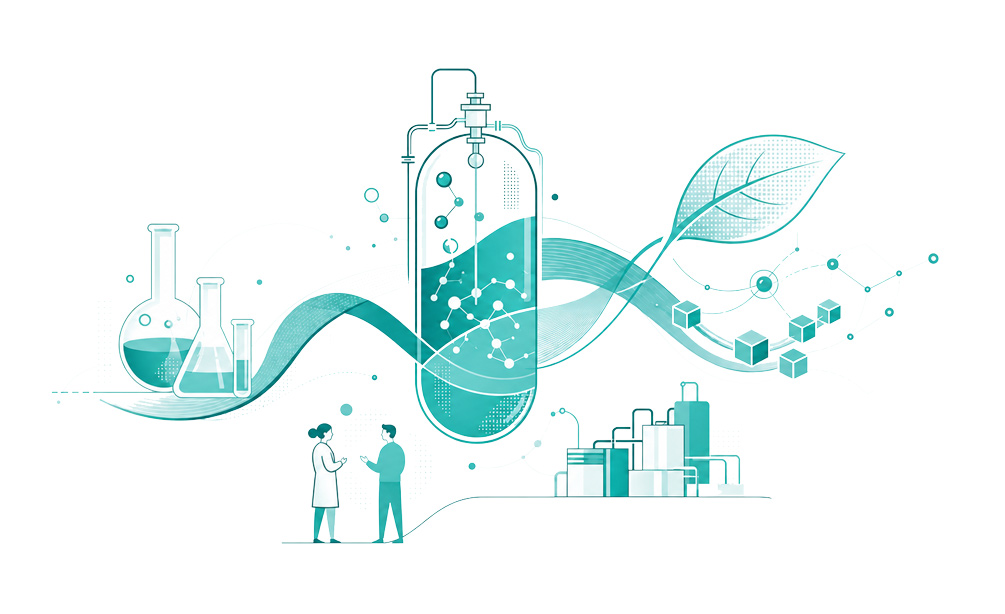
Panel discussion on...
ESG & Strategic Partnerships in Pharma Supply Chain


Shaojun Zhu
Director of Sustainability Development, PharmaBlock


Dongxin Zhang
Executive Director and Head of Business for New Modalities, PharmaBlock
David Ennis
Executive Advisor, PharmaBlock

ESG is increasingly shifting from “box-ticking” to being a strategic differentiator in pharma supply chains. How are you re-thinking your CDMO-supplier partnerships to embed environmental, social and governance criteria at the core of your contracts and operations?
ESG has matured from compliance reporting into a strategic differentiator—particularly in pharmaceutical supply chains, where operational resilience, ethical integrity, and environmental performance directly affect patient access and regulatory standing. Unlike traditional financial metrics, ESG is grounded in the principle of double materiality: how our operations affect the environment and society, and how external risks—climate change, social instability, regulatory shifts—affect our business. This dual perspective defines the entire value chain governance philosophy.
PharmaBlock’s vision is to lead industrial sustainability through innovation in green and intelligent chemistry. We deliver on our long-term ESG commitments through four core pillars: Responsible Operations, Green & Intelligent Development, Harmonious Integration, and Collaborative Advancement.
Responsible Operations serve as the cornerstone of all our business activities, while our commitments to employees and society are embodied in the principles of Harmonious Integration and Collaborative Advancement. To realize our sustainability ambitions, we are deploying cutting-edge innovative technologies—including continuous flow chemistry and biocatalysis—alongside AI solutions that are fully integrated across our R&D and manufacturing. These innovations not only enhance production efficiency but also significantly reduce product carbon footprints, mitigate operational safety risks, and minimize waste, thereby advancing our environmental stewardship. This comprehensive framework empowers PharmaBlock to proactively manage climate-related risks and navigate the complexities of the renewable energy transition.
Building on our internal ESG foundation, we extend the same rigorous standards outward—strengthening operational resilience by proactively managing material issues not only within our own operations, but also across our entire supply base. Our ESG framework prioritizes business ethics, labor and human rights, environmental governance, and climate action—areas systematically embedded into supplier selection, contracting, and performance evaluation.
We operate a risk-based, tiered supplier governance system enabling differentiated oversight by criticality. At policy level, we cascade sustainability charters and normative expectations to all suppliers and internal procurement teams, unifying the value chain around measurable goals. Institutionally, we have codified these requirements into standardized contractual clauses, now fully integrated into cooperation agreements, supplier commitment statements, and formal contracts.
Crucially, we move beyond compliance to active capability building—providing technical guidance, training, and joint improvement programs. We encourage suppliers to undertake EcoVadis and CDP assessments, adopt SBTi aligned reduction pathways, and progress toward Paris Agreement net-zero targets. Our ambition is to co-develop a responsible, low carbon upstream ecosystem, not merely monitor it.
With global supply chains under pressure from regulation, climate risk and stakeholder scrutiny, what digital tools or AI/ML-driven platforms are you using (or planning) to ensure real-time transparency, traceability and ESG performance across multiple tiers of your pharma supply network?
Digital intelligence is the operational backbone of our ESG strategy and the natural extension of the supplier governance model described above. At PharmaBlock, we treat AI and data platforms as essential enablers of responsible, transparent, and resilient supply chains. Intelligent transformation is embedded in our corporate strategy, driving upgrades across R&D, manufacturing, and operations to reshape the CDMO value chain.
Our efforts are organized around three interconnected platforms—Intelligent R&D, Intelligent Manufacturing, and Intelligent Operations—forming a closed loop of rapid target identification, verification, and supply.
- Intelligent R&D employs deep learning and generative AI to build a proprietary building blocks library spanning nearly 100 chemical series and an unlimited virtual compound space, shifting discovery from trial and error to predictive design. Our integrated wet-dry platform—AI design, automated synthesis, high throughput screening, and data feedback—has substantially compressed timelines in drug discovery programs. AI also enables green route design, reducing environmental burden at source—directly supporting the low carbon supplier ecosystem we cultivate.
- Intelligent Manufacturing unifies streamlined workflows, standardization, lean operations, automation, and digitalization. Proprietary technologies like micro-packed bed continuous hydrogenation—an ACS Green Chemistry Award winner—cut the carbon footprint of relevant products by 55%. Process Analytical Technology (PAT) deployed across sites enables realtime, non-destructive monitoring of critical quality attributes, improving firstpass yield while enhancing safety, environmental performance, and cost efficiency.
- Intelligent Operations deploys AI agents for safety early warning, financial analytics, experimental assistance, and customer service, forming a fullscenario intelligent matrix. Integrated systems cover supplier management, smart warehousing, and process safety.
Carbon asset management is an important approach to address global climate change. PharmaBlock has built multiple digital tools, including Product Carbon Footprint (PCF) E-system and Carbon Inventory E-system—both systems are verified by third parties, to manage the carbon emission data.
PharmaBlock’s PCF E-system named ZoePCF enables process carbon emission prediction, campaign-level calculation, route-comparison analysis, hot-spot identification and decarbonization pathway identification. Our approach to carbon footprint management is proactive and lifecycle-oriented: we initiate predictive modeling at the quotation stage, maintain continuous tracking throughout project execution, and deliver a finalized PCF report upon project conclusion. This seamless, end-to-end data stream enables our customers to integrate accurate carbon intelligence into their decision-making, ultimately supporting their broader carbon reduction targets.
PharmaBlock’s Carbon Inventory E-system monitors enterprise-wide GHG emissions in real time, pinpoints hotspots, and interconnects with finance, procurement, logistics, and energy systems etc.,
We are now designing a dedicated ESG platform to integrate business and management workflows, enhancing visual management and systematically capturing risks and opportunities across operations. Complementing this, our TCFD (Task Force on Climate-related Financial Disclosures) aligned climate governance framework assesses physical and transition risks, sharpening strategic foresight and accelerating circular economy exploration.
Looking to 2030, how will the role of CDMOs evolve in driving ESG innovation in pharma supply chains? What capabilities or partnerships will be most critical?
Looking to 2030, the roles of CDMOs will evolve across the following dimensions:
First, co-ownership of ESG targets. CDMOs will move beyond service provision to jointly develop SBTi aligned decarbonization roadmaps, green chemistry process designs, and pollution-control strategies with their customers. ESG KPIs—including emissions reduction, solvent recovery rates, and water-use efficiency—will become formal, contractually binding deliverables, underpinned by shared risk-reward incentive models.
Second, deployment of pioneering sustainable technologies. CDMOs must invest in technological innovations—such as continuous manufacturing and biocatalysis—to meet their sustainability goals. At PharmaBlock, we have already embedded these technologies across our R&D, manufacturing, and operational workflows. We are also actively collaborating with multinational pharmaceutical companies and leading academic institutions to advance ESG-driven innovation. These efforts include the co-development of scalable mechanochemical manufacturing processes and next-generation Tides production technologies, such as continuous flow liquid-phase peptide synthesis (LPPS), liquid-phase oligonucleotide synthesis (LPOS), enzymatic peptide ligation, and the adoption of bio-based solvents derived from renewable, non-fossil resources.
Third, end-to-end Scope 3 transparency and multi-tier supplier stewardship. CDMOs will build traceable visibility into Tier 2/3 supply chains for critical feedstocks, conduct upstream human rights due diligence, and provide verified, site-level emissions data—enabling customers to meet mandatory regulatory disclosures such as the Corporate Sustainability Reporting Directive (CSRD). AI-driven digital twins will enable real-time simulation and optimization of energy use, yield, and waste, turning data into a dynamic decision-making tool rather than merely a reporting obligation.
Fourth, shared sustainable infrastructure as a decarbonization lever. By 2030, we expect stronger ecosystem partnerships, exemplified by the Sustainable Markets Initiative’s Energise and Activate programmes, to expand renewable energy access for CDMOs. Through shared infrastructure and collaborative energy initiatives, the industry can accelerate decarbonization, create shared value, and enhance supply chain resilience.
Critical Capabilities: Advanced process technologies (biocatalysis, continuous manufacturing, and green chemistry process design), AI-driven digital twins for real-time emissions and resource optimization, and a sustainability-native workforce trained in green chemistry and life-cycle assessment (LCA). Culture and expertise, not just infrastructure, will determine execution speed.
Critical Partnerships: Long-term, risk-sharing framework agreements with pharma sponsors that embed joint ESG targets; upstream supplier coalitions for feedstock decarbonization and traceability; and active engagement with standard-setting bodies and verification alliances to ensure third-party validated ESG performance that meets the scrutiny of regulators and investors.
Panelists

Blake Unterreiner
Vice President and Business Unit Leader, Agilent Advanced Therapeutics


Michael Rainey
Director of Supply Chain, Almac Sciences
Françoise Durand-Rivoire
Global Head of ESG, Axplora

Hans van Hees
COO of Bachem AG

Matthias Müllner
CEO and co-founder of bespark*bio

Kerstin Stangier
Head of Corporate Development, Governance & Sustainability, BioSpring

Yann Dherve
Chief Executive Officer - CDMO, Cohance Lifesciences

Roger La Force
Managing Director, Dorra Pharma Group

Joanne Flinn
Chair, The ESG Institute


Xavier Touche1, Alain Goasguen2
1. Global Head of Supply Chain at Euroapi
2. Head of Environment & Energy at Euroapi

Anne Lise Kopp
Corporate ESG & Transformation Leader, Flamma Group

Robert Dream
Managing Director, HDR COMPANY LLC

Nathalie Huther
Chief Commercial Officer, HFR

Justin Mason-Home, FRSC
Owner/Director, HPAPI Project Services Limited

Patrizia Fazio
Head of applied research coordination, Imprima

Laura Monti
Responsible Sourcing - Purchasing department, Indena

Stanislav Kazanov
Head of GRC, Cybersecurity & Sustainability, Innowise

Sonja Merkas
Founder and CEO, Livinovea

Verena Buback
Head of Sustainability Strategy, Merck Procurement

Dirk Kirschneck
Strategic Director,
Microinnova Engineering GmbH

Saharsh Davuluri
CEO & Managing Director, Neuland Laboratories

Tammy Cooper
President, Nitto Avecia and
Nitto Avecia Pharma Services
Shaojun Zhu1, Dongxin Zhang2, David Ennis3
1. Director of Sustainability Development, PharmaBlock
2. Executive Director and Head of Business for New Modalities, PharmaBlock
3. Executive Advisor, PharmaBlock

Peter DeYoung
CEO, Piramal Global Pharma


Sonia Rasi1, Michele Tappa2
1. Financial Director & Chief Sustainability Officer, Procos
2. ESG Manager, Procos
Pascal Villemagne
CEO, Seqens

Darryl Ratty
Executive Director, Global ESG, SK pharmteco


Natalia Agüeros1, Ralf Karch2
1. Sr. Director, ESG & Sustainability, Umicore
2. Director BU Research & Development at PMC, Umicore

Dani Reguant
Supply Chain Director, Uquifa Group
References and notes
- Howes, M.J.R., Simmonds, M.S.J. and Kite, G.C. (2004) 'Evaluation of the quality of sandalwood essential oils by gas chromatography–mass spectrometry', Journal of Chromatography A, 1028(2), pp. 307-312. doi: 10.1016/j.chroma.2003.11.093.
- RTI Health, Social, and Economics Research (2002) 'The Economic Impacts of Inadequate Infrastructure for Software Testing', Report prepared for the National Institute of Standards and Technology (NIST), Gaithersburg, MD.