WOMEN'S HEALTH
The evolution of female-first active nutrition
Consumer Perception and Ingredient-Based Clinical Evidence for Menopause-Related Discomforts

Matevž Ambrožič1 , Veronika Pipan2
1. Marketing Director at PharmaLinea, Ljubljana, Slovenia
2. Head of Scientific Support at PharmaLinea, Ljubljana, Slovenia

About the Authors
Matevž Ambrožič
Matevž Ambrožič has an academic background in biochemistry, with a specialty in protein biochemistry. Following his research position at Stockholm University and development position at Novartis, Ambrožič applied his knowledge in the food supplement industry, leading marketing at PharmaLinea.
Veronika Pipan
Veronika Pipan has a background in biotechnology and nine years of experience in the food supplement industry. As the Head of Scientific Support at PharmaLinea, she manages formulation and innovation, and provides scientific support to marketing and sales departments. Her main focus is identifying and selecting clinically supported ingredients and developing finished products, backed by thorough research and strong substantiation.


KEYWORDS
Women’s health
Active nutrition
Creatine
Gummies
Abstract
Female-first active nutrition is reshaping the performance supplement landscape. Driven by growing scientific recognition of sex-specific physiology and life-stage needs, women’s health became the fastest-growing supplement category in 2025 (+8,6%, Euromonitor (1)). Consumers are increasingly seeking targeted solutions for defined needs rather than generalized multivitamins, with women-specific launches already accounting for 23,1% of active nutrition innovations. Creatine exemplifies this shift, evolving from a “bulking” ingredient to one positioned for tone, strength, cognitive resilience, and healthy aging. Supported by emerging female-focused research and innovation in convenient delivery formats, female-first active nutrition represents a structural transformation, not a passing trend. This article aims to highlight the key market trends, scientific drivers, and innovation accelerating the shift toward female-first performance nutrition.
Introduction
Women are no longer a niche audience in active nutrition. What was once a category dominated by male-centric performance claims, bodybuilding culture, and “one-size-fits-all” formulations, is now undergoing a structural shift. Science, sponsorships, formulation strategy, and consumer expectations are converging to create a new paradigm: female-first active nutrition.
This evolution is not simply about pink packaging or adapted messaging. It reflects a growing recognition that women’s physiology, training goals, and recovery needs are shaped by hormonal fluctuations and distinct life-stage transitions - from menstrual cycle phases to pregnancy, postpartum, perimenopause, and beyond. As a result, performance is being redefined: not just as maximal strength or mass gain, but as sustainable energy, lean strength, resilience, and long-term independence – goals, that differ meaningfully from those of men.
Brands that understand this shift are moving beyond generic “women’s versions” and building solutions around women’s lived realities. They are repositioning ingredients through a lifecycle lens, investing in women’s sports as a cultural signal, and redesigning delivery formats toward convenient, digestible, and everyday-friendly products that fit modern routines and performance ambitions.
Precision over generalization
In recent years, there has been a marked rise in focus on women’s health, reflected across the nutraceutical industry. Although still among the smaller supplement categories overall, women’s health was the fastest-growing supplement category in 2025, expanding by 8,6% year-over-year, according to Euromonitor International (1).
This growth is not simply volume-driven, it reflects a structural shift in how women approach supplementation.
According to the 2025 Vitamin Shoppe Trend Report (2), women are increasingly seeking out case-specific supplements targeting defined need states such as menopause, PMS, prenatal and postnatal health, and urinary tract health, rather than relying on generalized products like multivitamins.
That demand shift is now clearly visible in innovation pipelines. In 2025, the share of women’s health–specific launches among active nutrition supplements reached 23,1%, according to Innova Market Insights (3). In other words, female-focused positioning is no longer confined to traditional “women’s health” categories, it is actively reshaping performance nutrition.
Science as the growth driver
The surge in women-focused supplements is supported by increasing research into sex-specific health challenges across life stages.
A meta-analysis published in Frontiers in Endocrinology highlights vitamin K2’s role in bone health, particularly in postmenopausal women with osteoporosis (4). A study in Metabolites presents the dual benefits of Zooca Calanus Oil on cardiac and metabolic health in obese women with prediabetes (5). Research in Nutrients explores the impact of vitamin D deficiency on maternal health during early pregnancy (6).
This growing evidence base is pushing the industry beyond generalized formulations toward targeted, life-stage solutions.
The shift in active nutrition
Active nutrition is one of the clearest examples of this shift. In 2024, GNC introduced a multivitamin positioned specifically for active women to support energy and recovery. In 2025, Jüced (makers of Grüns) launched pre-workout energy gummies designed for women.
At the same time, brand investment is shifting toward women’s sports. Historically, high-profile sponsorships centered on men’s leagues. That is changing and many well-known brands, e.g., Thorne, Balchem, are now increasingly turning to women’s leagues as well.
In December 2025, Thorne announced a partnership with Unrivaled, a professional women’s basketball league, marking its first official women’s basketball sponsorship (7). The partnership includes naming rights for the players’ lounge, built around athlete feedback and recovery needs, and it reflects the brand’s ongoing commitment to supporting women athletes.
Similarly, in 2025, Balchem entered a multi-year partnership with FC Bayern Women. Its K2VITAL™ brand became the official sponsor, highlighting vitamin K2’s role in bone density and heart health in elite female athletes (8).
These partnerships signal a broader commitment to women’s performance narratives, not just product launches.
From bulking to lifestyle support
Perhaps the most illustrative example of repositioning is creatine.
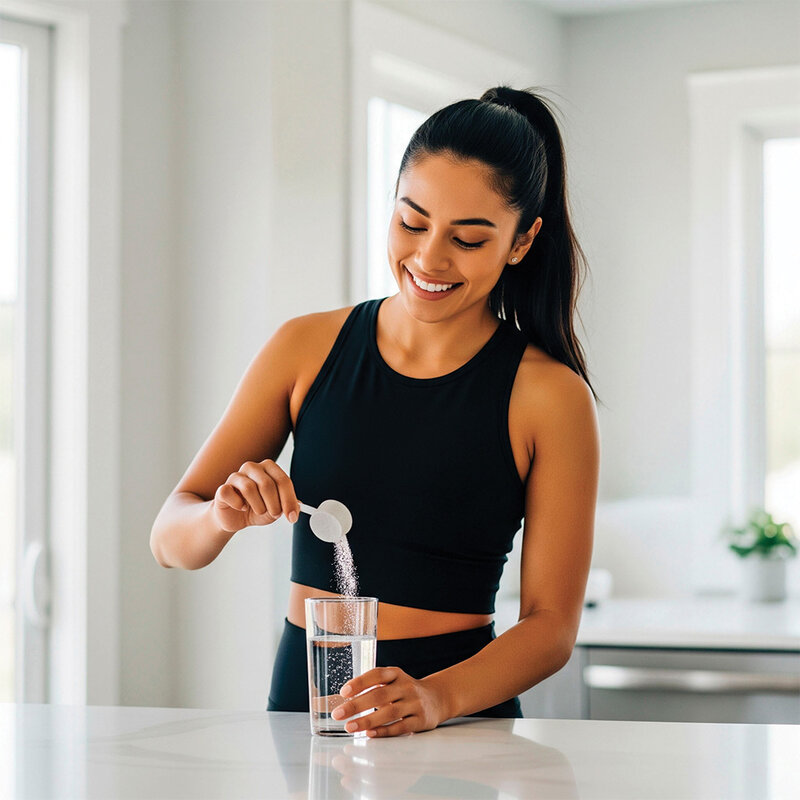
In 2025, 1 in 4 consumers in Europe reported using creatine for sports and functional nutrition (9). Creatine is now a stand-out ingredients, gaining traction within women’s active nutrition launches. We’re seeing the rise of several products for aging women, marketing creatine as the essential tool for muscle mass retention and cognitive resilience during menopause.
Once aimed primarily at “bulking”, recently launched products are positioned more for “toning” and “strength”. For example, Zooki’s Creatine+ for women is positioned for lean muscle growth, energy, endurance, recovery, and mental clarity.
Historically, women avoided creatine due to concerns about bloating and water retention. However, brands are now taking into consideration the female digestive health and are directly addressing the issue by positioning their new launches as “bloat-free”.
True Grace’s FuelHer™ RapidMix™ Creatine promotes itself as “a clean, bloat-free creatine formula,” with “bloat-free” prominently highlighted as one of the product’s main USPs, even included on the packaging itself. Tone by Arrae markets its creatine gummies as delivering “no bulk or bloating” with a “gut-friendly formula.” The positioning focuses on full-body tone, lean muscle, improved performance, and recovery. They also use a “gut-friendly formula” statement on their product packaging.
In January 2026, Kourtney Kardashian’s brand Lemme launched Creatine Gummies positioned for toning, strength, cognitive support, and women’s wellness. Featuring Kris Jenner in Olympic-inspired gear, the ad campaign reframes creatine from “gym mass builder” to a tool for women over 50 seeking muscle protection, energy, brain function, and independence.
This is not simply new packaging: it is a redefinition of the ingredient narrative.
Understanding lutein and zeaxanthin bioavailability: The marigold advantage
The science behind creatine in women
Clinical trials and systematic reviews report that creatine supplementation can provide significant health benefits for women across the lifespan, particularly because women exhibit 70–80% lower creatine levels and typically consume lower amounts of dietary creatine than men. Women typically have lower intramuscular creatine levels due to lower muscle mass and hormonal fluctuations. This means women store, metabolize, and use creatine differently from men and may respond differently to supplementation. Latest scientific authors argue that creatine research should be designed specifically around female life stages, including menstrual cycle phase, pregnancy, and the peri-/post‑menopausal transition (10, 11, 12).
The strongest, most consistent evidence for creatine benefits in women is in exercise performance and body composition. Studies and recent reviews report improvements in muscle strength, exercise performance, and lean mass, especially when creatine is combined with resistance training. Creatine supplementation may slow down age-related muscle loss (sarcopenia), compared to exercise alone, and may positively influence bone mineral density in post-menopausal women (10, 11).
Creatine is gaining interest in relation to reproduction and pregnancy because higher amounts of creatine are required to support the growing uterine and placental tissue and the developing fetus. Suboptimal levels have been linked to low birth weight and preterm birth. Scientific papers discuss links between creatine metabolism, placental function, and fetal growth, while emphasizing the need for more human clinical data (13).
There is emerging data on creatine benefits for cognitive performance, including improvements in memory and executive function tasks, processing speed, and attention. Supplementation can be especially helpful during periods of high mental stress or sleep deprivation, which are common during pregnancy, postpartum, and menopause (14). Additionally, creatine supplementation may help improve mood and alleviate symptoms of depression, particularly as an adjunct to SSRI medication in women (15).
Finally, the lack of discussion and exploration of creatine use among women to date is a disadvantage and a missed opportunity. Better understanding of creatine metabolism during multiple life stages could have important implications for improving general health and exercise performance for women across their lifetime (10, 11).
Convenience, digestibility, and format are becoming as critical as efficacy.
Innovation in formulation and delivery
We’re also seeing some innovation in formulating and delivery formats.
Firstly, there is a rising popularity of clear whey and creatine products – light, juice-like “refreshment nutrition”, which is replacing heavy, milky shakes. Clear whey is designed to mix like an easy-to-consume post-workout drink while delivering all the muscle-repairing power of traditional whey protein. For example, in December 2024, Bulk introduced a Clear Whey all-in-one product with creatine, designed to maximize recovery and maintain growth.
Products are moving toward sticks, shots, and gummies that fit into a busy day, moving away from the traditional bulky packaging. According to Innova Market Insights (3), gummies were the most popular format for new product launches containing creatine in 2025.
While creatine powder remains a mainstay, the shift towards gummies can also be seen in searches on vitaminshoppe.com for “creatine gummies,” which have grown by over 1300% in 2025 (YTD June 2025) (16). For example, Universal’s ANIMAL creatine chews, which were one of the first to launch at The Vitamin Shoppe, have experienced sales up over 100% in 2025. Since then, several other brands have launched creatine chews and gummies, including Force Factor, Legion, and Codeage.
Furthermore, advanced delivery systems are also appearing, e.g., BodyTech Elite has launched the first-ever creatine beadlet, developed with NovaQSpheres® technology by Specnova in 2025. This format offers precision-controlled release and enhanced absorption (16).
More than just a trend
Female-first active nutrition is not a short-term marketing adjustment. It reflects a broader shift in science, consumer expectations, and industry strategy.
As research increasingly highlights sex-specific physiology and lifecycle needs, women are no longer expected to “fit into” performance products designed around male bodies, male goals, and male sporting narratives. Instead, the category is evolving toward solutions that recognize how training capacity, recovery, body composition, and wellbeing fluctuate across hormonal phases and major transitions such as pregnancy, postpartum, and menopause.
Women are seeking precision over generalization, lifecycle support over short-term gains, and comfort alongside performance. They want strength without bulk, tone without compromise, and energy that lasts, with benefits that extend beyond the gym into daily function, cognitive resilience, and long-term independence. This also raises the bar for credibility: clearer claims, better substantiation, and products that feel designed for women rather than merely repackaged to women.
Ingredients such as creatine, once narrowly defined, are being reframed through a lifecycle lens - from aesthetics and strength to healthy aging, brain health, and durability. Brands that succeed will move beyond superficial targeting and instead combine science-backed, stage-specific positioning with thoughtful delivery systems and convenient formats. Just as importantly, they will invest authentically in women’s performance ecosystems, from research and education to real partnerships in women’s sport, making female-first active nutrition a new benchmark, not a temporary category play.

References and notes
- Euromonitor International. Market data on women’s health supplements category growth. Dec 2025.
- The Vitamin Shoppe. Health & Wellness Trend Report 2024. May 2024.
- Innova Market Insights. Market data on women’s health-specific launches among sports supplements. Feb 2026.
- Zhang Z, et al. The effect of vitamin K2 supplementation on bone turnover biochemical markers in postmenopausal osteoporosis patients: a systematic review and meta-analysis. Frontiers in Endocrinology (Lausanne). 2025;16:1703116. doi:10.3389/fendo.2025.1703116.
- Kerlikowsky F, et al. Effects of 12 weeks of Calanus oil supplementation on cardiac diastolic function in obese and prediabetic women—A pilot study. Metabolites. 2025;15(9):596. doi:10.3390/metabo15090596.
- Qiu Y, et al. Alterations in the metabolic and lipid profiles associated with vitamin D deficiency in early pregnancy. Nutrients. 2025. doi:10.3390/nu17193096.
- Thorne. Unrivaled names Thorne as official sports nutrition partner. 2025 Dec 15, cited 2026 Feb 13. Available from: https://www.unrivaled.basketball/news/unrivaled-names-thorne-as-official-sports-nutrition-partner-d6ydw4pcf49m
- Balchem Corp. Build your inner strength: Balchem and FC Bayer Women forge multi-year partnership with K2VITAL™. 2025 Feb 6, cited 2026 Feb 13. Available from: https://balchem.com/news/k2vital-fc-bayern-partnership/
- Innova Market Insights. Creatine Supplement Launches: Trends & Innovations in Europe webinar. 2025 Dec 3.
- Smith-Ryan AE, Cabre HE, Eckerson JM, Candow DG. Creatine supplementation in women’s health: a lifespan perspective. Nutrients. 2021;13(3):877. doi:10.3390/nu13030877.
- Smith-Ryan AE, DelBiondo GM, Brown AF, Kleiner SM, Tran NT, Ellery SJ. Creatine in women’s health: bridging the gap from menstruation through pregnancy to menopause. J Int Soc Sports Nutr. 2025;22(1):2502094. doi:10.1080/15502783.2025.2502094.
- Gutiérrez-Hellín J, Del Coso J, Franco-Andrés A, Gamonales JM, Espada MC, González-García J, et al. Creatine supplementation beyond athletics: benefits of different types of creatine for women, vegans, and clinical populations—a narrative review. Nutrients. 2024;17(1):95. doi:10.3390/nu17010095.
- Ellery SJ, Walker DW, Dickinson H. Creatine for women: a review of the relationship between creatine and the reproductive cycle and female-specific benefits of creatine therapy. Amino Acids. 2016;48(8):1807–17. doi:10.1007/s00726-016-2199-y.
- Gordji-Nejad A, Matusch A, Kleedörfer S, et al. Single dose creatine improves cognitive performance and induces changes in cerebral high energy phosphates during sleep deprivation. Sci Rep. 2024;14:4937. doi:10.1038/s41598-024-54249-9.
- Lyoo IK, Yoon S, Kim TS, Hwang J, Kim JE, Won W, et al. A randomized, double-blind placebo-controlled trial of oral creatine monohydrate augmentation for enhanced response to a selective serotonin reuptake inhibitor in women with major depressive disorder. Am J Psychiatry. 2012;169(9):937–45. doi:10.1176/appi.ajp.2012.12010009.
- The Vitamin Shoppe. Health & Wellness Trend Report 2025. May 2025.
